Holiday Notice: We will be closed from April 4th to 6th, 2024, for the Qing Ming Festival. Learn more
InnovEd Parts Program comes! Bridge innovation and education. Perfect for college students and faculty eager to create. Join us.
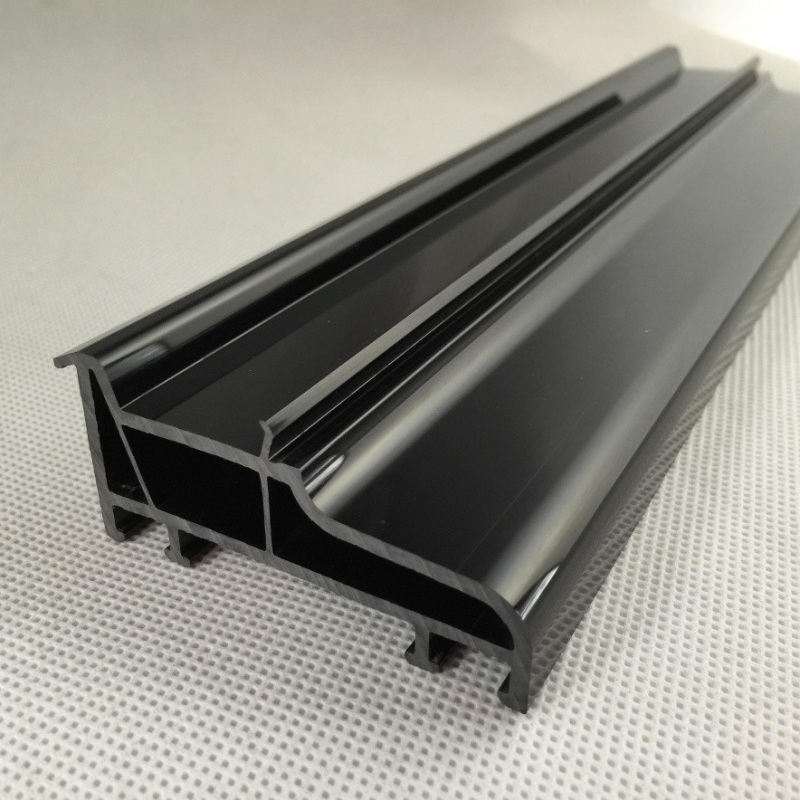
| Formation principle | By using the punch or die boss to apply a huge pressure to the billet placed in the die cavity/extrusion barrel, the material is forced to undergo plastic flow under a triaxial compressive stress state, thereby filling the mold cavity or extruding it out to form. |
| Applicable materials | Primarily metals (aluminum, copper, steel and their alloys), and can also be used for non-metallic materials such as plastics, rubber, and graphite. |
| Key features | High material utilization rate (less cutting required), improved internal structure and mechanical properties, capable of manufacturing complex non-circular cross-sections (such as thin-walled, deep holes, and long rods). |
| Hot extruded parts | The billet is heated above the recrystallization temperature for forming.
They are often used for large profiles, tubes, bars, and difficult-to-deform alloy parts (such as aerospace structural components, seamless tubes), and the surface requires subsequent finishing. |
| Cold extruded parts | Formed at room temperature, with high precision (up to IT7-IT8 grade), smooth surface, can be used directly.
Typical products include gears, sleeves, cartridge cases, piston pins and fasteners. |
| Wen extruded parts | Situated between the two, they are suitable for difficult-to-machine materials such as medium and high carbon steel or stainless steel, balancing both precision and deformation resistance. |
| According to the flow mode | they are divided into positive extrusion pieces (with the flow direction being the same as the pressing direction),
reverse extrusion pieces (with the flow direction being opposite), and composite extrusion pieces. |

| Main shortcoming | High unit compression force, high energy consumption, extremely high requirements for mold strength/mobility, high mold cost, only suitable for mass production;
During positive extrusion, uneven metal flow easily leads to “tail shrinkage” defects. |
| Typical application | Widely used in fields such as aluminum/copper profile tubes (hot extrusion), precision fasteners/gears/sleeves (cold extrusion), aerospace difficult-to-deform alloys, and food/ceramic continuous molding. |
Qigao is a welder and flame cutting machines leader in China. We insists on supplying professional technology, high performance and good after-sale service to meet the requirements of customers from around the worlds. China Qigao will try our best to become your one-stop supplier. Name your detailed task and we will find a solution together!
Use this call-to-action area for product inquiries, sample requests or technical consultation routing.